

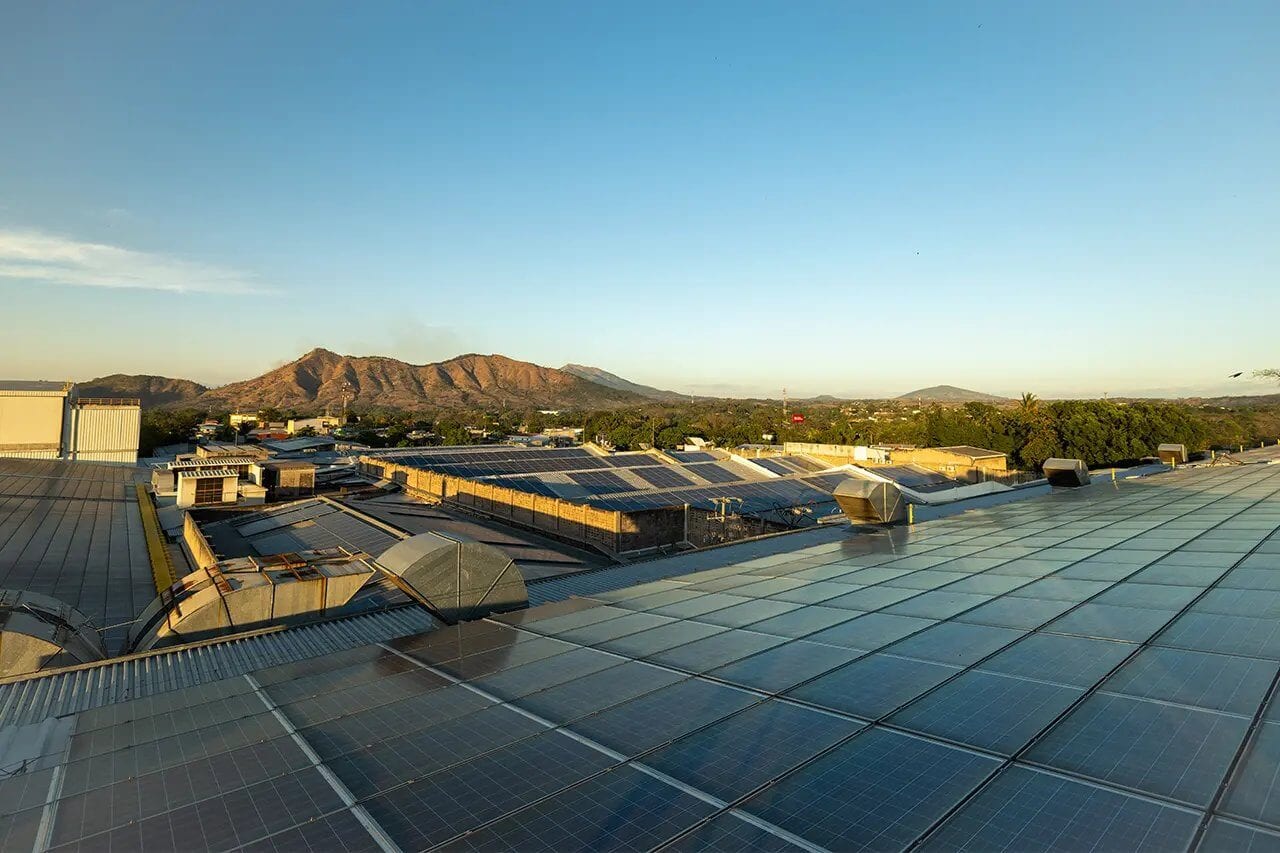
Using sustainable materials is a big part of what we do, but just as important are the eco-friendly ways we produce everything along the way. With ongoing investments in solar energy and water recycling infrastructure, our El Salvador supply chain continues to lead in innovation for responsible manufacturing.
Last year, Intradeco proudly announced the successful addition of 25 megawatts of solar energy capacity to El Salvador’s national grid, along with an additional 5 megawatts in Honduras.
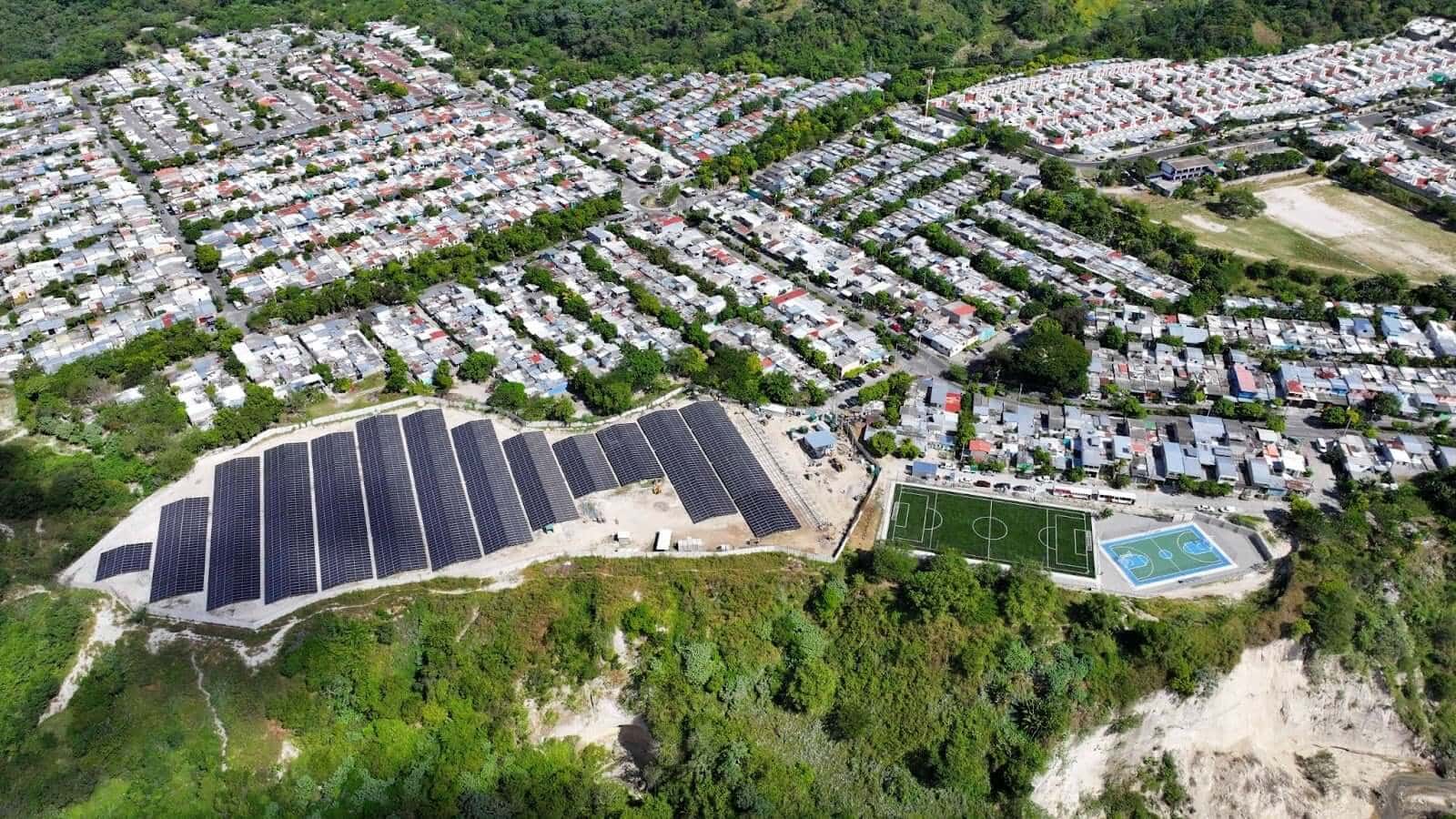
By partnering with a pioneering industry leader, we can power a significant portion of our manufacturing operations with clean, on-site generated solar energy. Specifically, 37% of the energy consumed in our El Salvador supply chain is generated directly on-site from solar power, while an impressive 75% of all energy used comes from renewable sources.
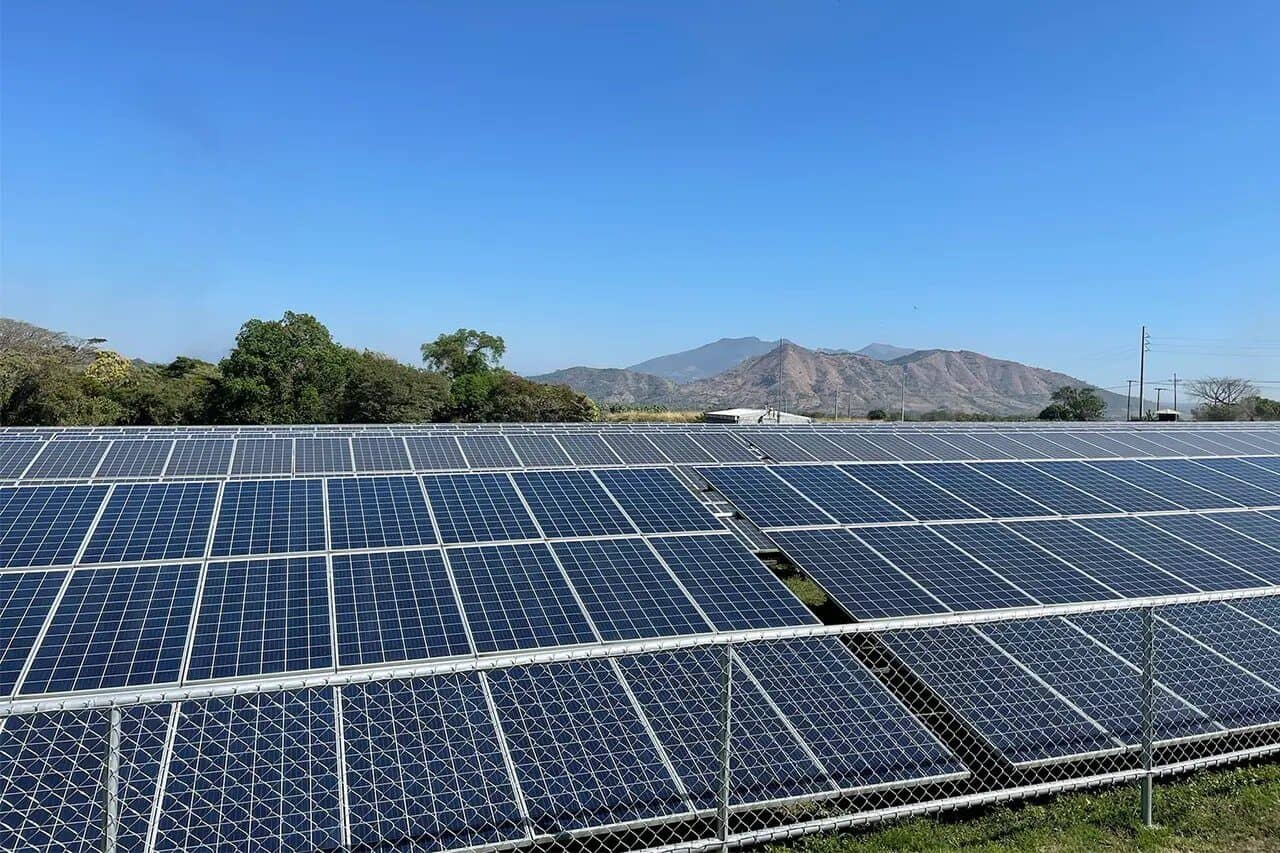
Apparel and textile manufacturing has traditionally been a fossil fuel resource-intensive process, particularly when relying on virgin synthetic fibers like nylon and polyester. Each year, producing new polyester fiber alone consumes roughly 70 million barrels of oil, considering only material production. The manufacturing process itself demands substantial energy, much of which is fossil-fuel-based, also leading to significant greenhouse gas emissions.
We are proud to help mitigate these impacts by using recycled materials such as rPET (recycled polyester) and recycled cotton for our products. Coupled with our renewable energy-powered manufacturing, this approach reduces our overall supply chain’s average fossil-fuel energy use by 62% and lowers greenhouse gas emissions by 58%, making a big impact on sustainability.
Beyond renewable energy, water use and pollution remain critical challenges in the fashion industry, and our El Salvador facility is leading efforts to address these issues.
Globally, the fashion industry is the second-largest consumer of freshwater resources, with fabric dyeing and finishing processes responsible for more than 20% of industrial water pollution worldwide. Toxic chemical discharge contaminates waterways, threatening aquatic ecosystems and the health of communities reliant on these water sources.
Our state-of-the-art manufacturing facility in El Salvador tackles this challenge head-on through advanced water recycling technologies. Intradeco employs a sophisticated treatment system combining osmosis, reverse osmosis, and sand filtration to produce potable water. Thanks to this system, the facility consistently recycles around 60% of the water used during manufacturing, dramatically reducing both water consumption and wastewater discharge.
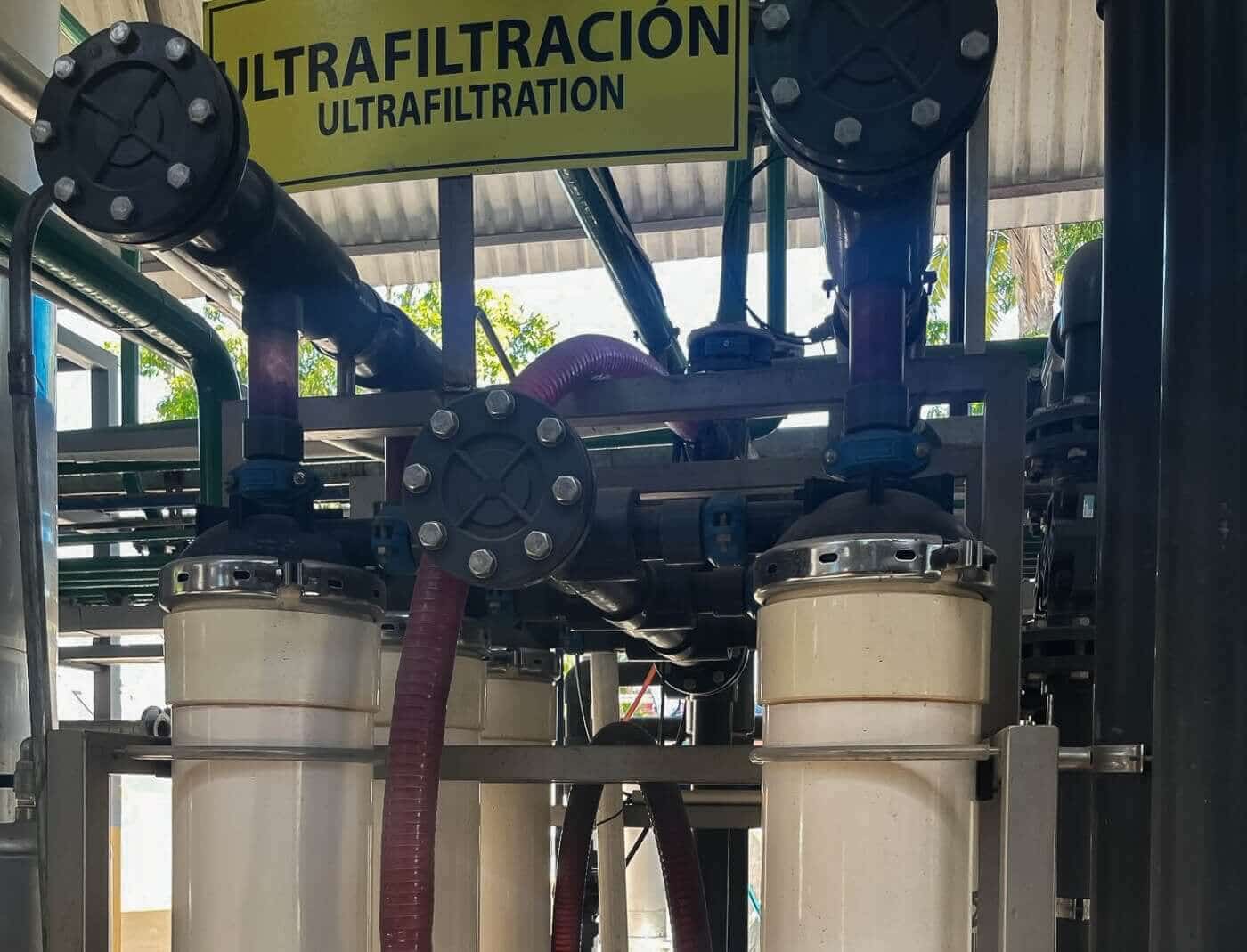
Globally, water consumption and wastewater treatment standards vary widely, with some regions historically facing significant challenges in wastewater management. Although El Salvador does not mandate water recycling by law, it requires proper wastewater treatment before discharge. Through leading by example, our facility has already influenced the industry locally: three other textile mills have visited the Intradeco El Salvador site to learn from its practices, and two large mills have since launched their own water recycling programs.
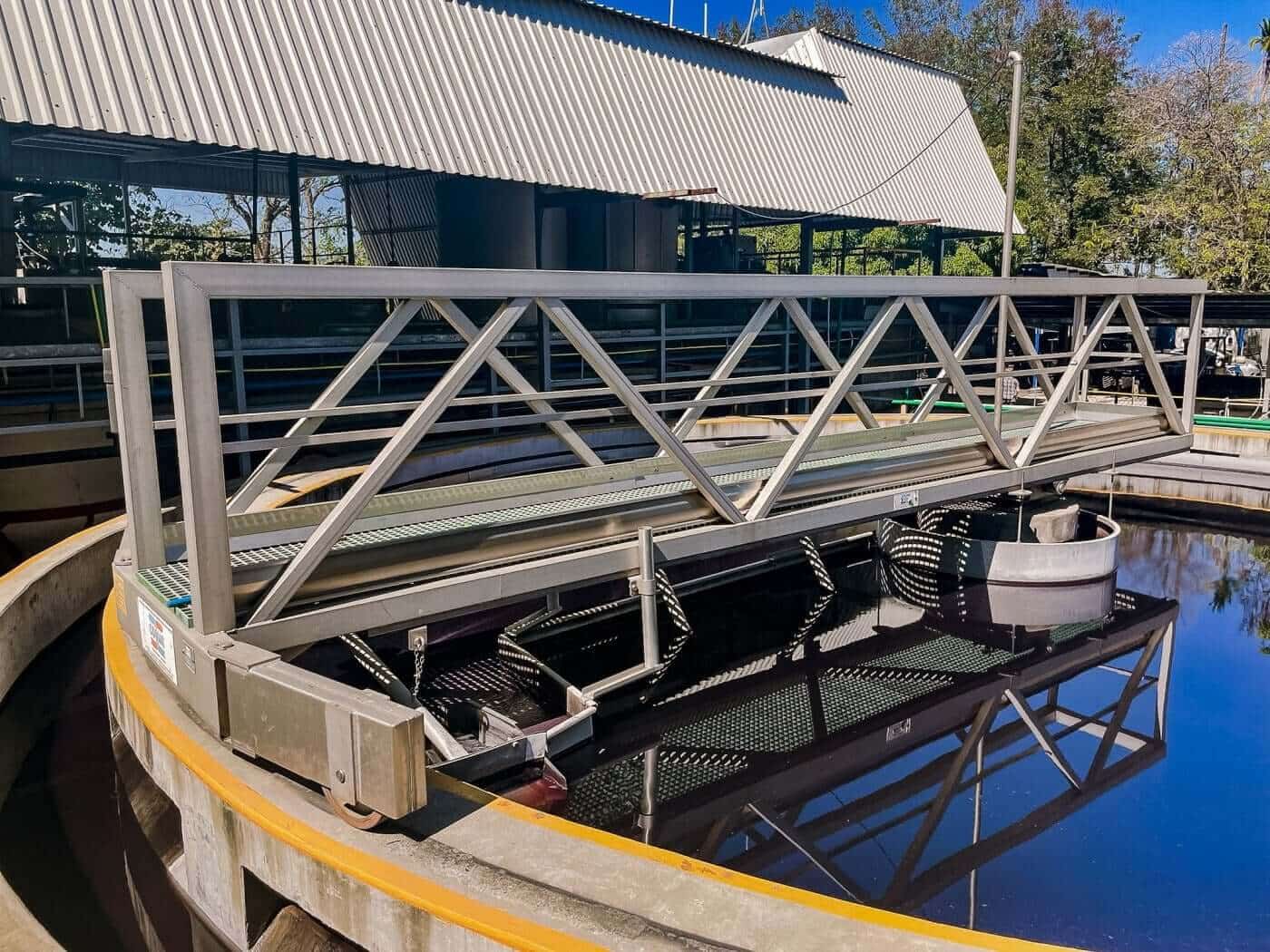
At Recover, we believe sustainability is not just about materials but about responsible production practices that inspire industry-wide change. By working with partners innovating in renewable energy and water management, we are proud to be part of a movement helping the fashion industry move toward a more sustainable and regenerative future.